
Materiality
Stakeholder engagement
The Corporate Policy for Institutional Relations of the Nueva Pescanova Group aims to establish and develop a framework for Institutional Relations with our stakeholders based on collaboration, transparency, engagement, and two-way communication capable of continuously building trust. These relationships are based on solid principles of business ethics and institutional integrity, equal treatment, non-discrimination, and active listening, to acknowledge stakeholders’ legitimate interests and expectations, and effectively communicate information on the activities and businesses of the Nueva Pescanova Group.
Based on these principles, we designed our Stakeholder Relationship Management plan, recognizing that it is an essential matter to guide, among others, our materiality and transparency strategies, helping us to ensure a responsible and sustainable business model.
We want to continue promoting the involvement of our stakeholders in the creation of shared value by the companies of the Nueva Pescanova Group, in response to their legitimate interests and expectations, to build trust and consolidate the Group’s corporate reputation, as well as to strengthen involvement with our partner communities, promoting their sustainable development.
Materiality analysis
Materiality is a fundamental concept in business management, as it enables organisations to identify the most relevant aspects — those that require appropriate prioritisation and active management: material matters.
In the current regulatory context of corporate reporting, the concept of double materiality has gained increasing relevance. This approach analyses, on the one hand, how sustainability-related risks and opportunities — in their broadest sense — can significantly influence value creation and, on the other, how the company’s activities impact society and the environment. Adopting a double materiality perspective makes it possible to gain a more comprehensive and rigorous view of our performance, supporting strategic decision-making aligned with both regulatory requirements and the expectations of our stakeholders.
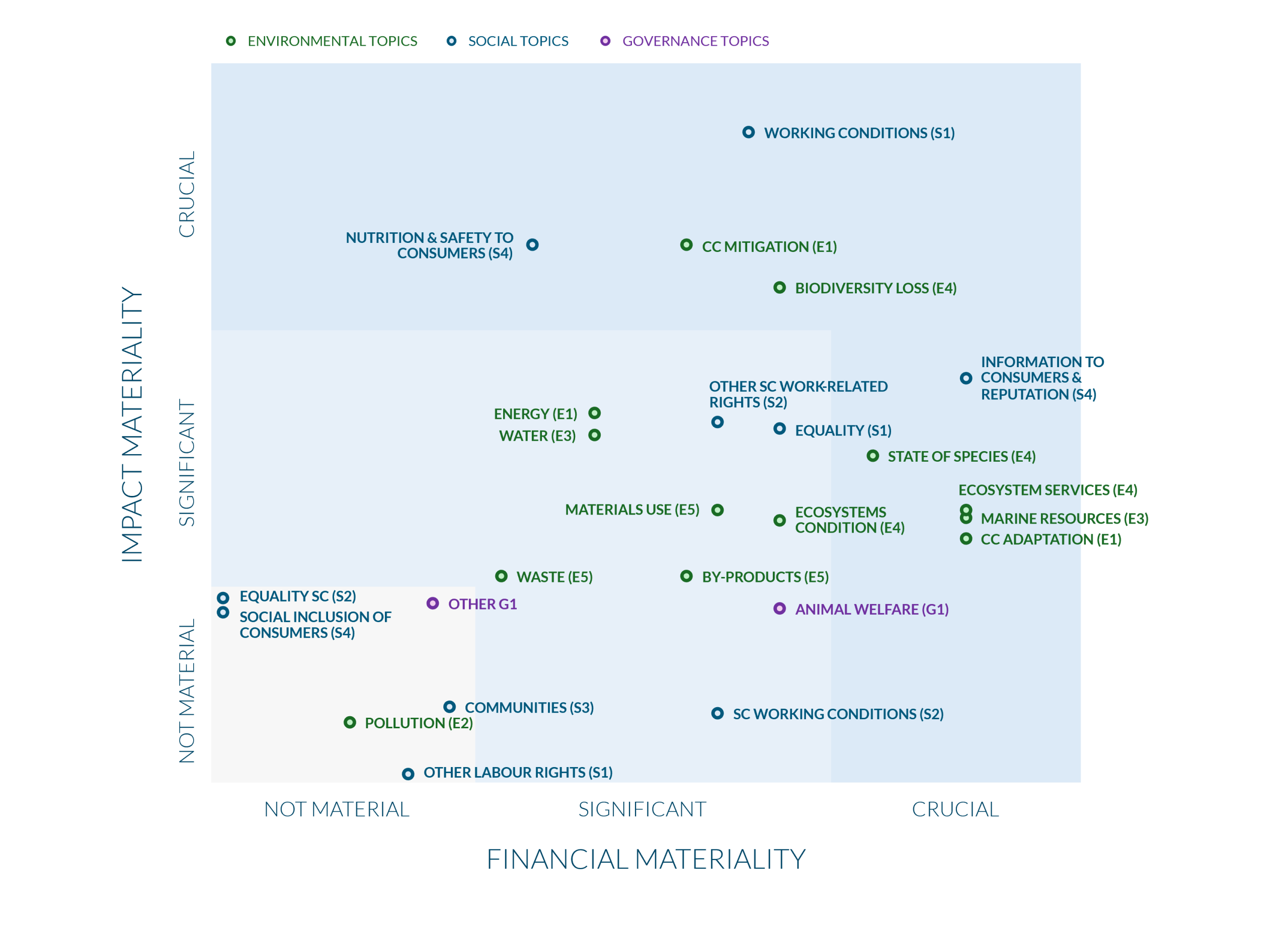
As part of our Double Materiality Assessment, we systematically identify and evaluate the actual and potential impacts of our activities on the environment and society, as well as sustainability-related risks and opportunities that may affect our business. Applying this framework across our operations and throughout the value chain has enabled us to develop a double materiality matrix, prioritising the main Impacts, Risks and Opportunities (IROs) and establishing a solid basis for their ongoing monitoring and integration into our corporate strategy.
Our analysis highlights that the most strategically relevant sustainability areas include E1 (Climate Change), E3 (Water and Marine Resources), E4 (Biodiversity and Ecosystems), S1 (Own Workforce) and S4 (Consumers and End Users). These sub-topics constitute priority areas for the company and guide our efforts to manage risks, seize opportunities, mitigate negative impacts and enhance positive ones.
To find out more about the results of this process, we invite you to download the 2025 Double Materiality Report of the Nueva Pescanova Group.
You can also consult the Materiality Analyses from 2023, 2021, and 2019.
Double Materiality Matrix 2025 of the Nueva Pescanova Group: